Independent SEO consultant · Bhaktapur, Nepal · Updated 19 August 2026

SEO expert in Nepal for businesses ready to lead.

I'm Suraj Giri, an independent SEO expert in Nepal, based in Bhaktapur. The person you brief is the person who does the work — technical, local and content SEO for businesses across Nepal, at published rates from NPR 20,000 a month, month to month, with every account owned by you. Judge any provider, me included, on those three terms rather than the job title.

  • Independentno agency layers
  • 8+ yearsin organic search
  • CertifiedGoogle Analytics, Ads Search, HubSpot SEO
Suraj Giri, independent SEO expert in Nepal
Suraj Giri SEO strategy · Technical · Local

Brands I’ve worked with

SEO and link building for these brands was delivered as the Nepal-based specialist for Acero Digital, the London, United Kingdom agency I partner with on overseas work. My own engagements span Nepal plus clients in Australia, the UK and the US. Nepal-based work is under case studies.

  • Payhawk
  • Oxa Life
  • Code Intelligence
  • Perspective AI
  • Master Ventures
  • Gulbenkian Andonian Solicitors
  • Paradiso
  • Bluefrog Design
  • C.L. Lawyers
  • Spouse Visa Lawyers
  • Sponsor Licence Lawyers
  • Chiswick Plumbers

Services that drive
real results

As an SEO expert in Nepal, I cover the full picture — technical SEO, on-page and off-page SEO, and the content that search engines reward — so hidden issues turn into authority that lasts. Every engagement is designed around one thing — your revenue.

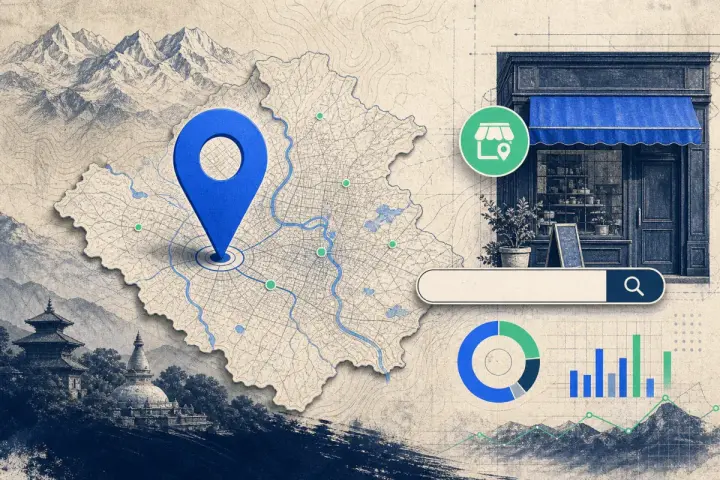
Editorial visualization of search signals, connected queries and measured organic growth
Search intelligence becomes useful when every signal connects to a prioritized business decision.

SEO Audit & Strategy

A comprehensive 200+ checkpoint audit and prioritized roadmap, scoped after a free opportunity review.

Request a review

On-Page SEO

Content, meta tags, headings, internal links — every element optimized for maximum search visibility.

Explore

Technical SEO

Core Web Vitals, crawlability, schema markup, site speed — the invisible foundation of rankings.

Explore

Link Building

Off-page SEO built on white-hat backlinks from relevant, high-authority sites. Quality over quantity, always.

Explore

Local SEO

Dominate Google Maps and local search in Kathmandu and across Nepal.

Explore

SEO Training

Practical, no-fluff SEO courses for individuals and teams. Learn to rank on your own.

Explore

Industry-specific SEO solutions:

Education Consultancy SEO Trekking Agency SEO

What an SEO expert
in Nepal actually does

Expert, specialist, consultant, freelancer — the titles are used interchangeably in Nepal and none of them tell you what the work involves. Here is the honest version, so you can judge whether you need it.

An SEO expert in Nepal helps a business improve how visibly it appears in Google search results; the work divides into four areas — making the site technically legible to a crawler, matching pages to the queries real customers type, earning credible mentions and links from organisations with standing, and reporting in terms of enquiries rather than rankings. Most businesses that contact me do not need all four. They need one specific thing fixed, and they have been sold a monthly retainer instead. So before describing what the work is, it is worth being clear about what it is not.

It is not publishing blog posts on a schedule. It is not submitting your site to two hundred directories. It is not buying links, and it is certainly not paying someone to "boost DR" — a practice that is actively harmful and that I have watched damage more Nepali sites than it has helped. If a provider leads with volume of output rather than diagnosis of a problem, they are selling activity, not results.

The actual work divides into four areas, and a competent SEO specialist in Nepal should be able to tell you which one is your bottleneck within an hour of looking at your site.

1. Making the site legible to a crawler

Search engines have to reach your pages, read them, and decide they are worth storing. A surprising number of Nepali business sites fail at this first step for mundane reasons — a staging site left indexable, a robots.txt blocking the CSS that Google needs to render the layout, JavaScript that builds the page contents after the crawler has already left, or pagination that generates thousands of near-identical URLs and exhausts the crawl budget before the important pages are seen.

This is unglamorous work with the highest hit rate of anything in SEO, because a page that cannot be indexed cannot rank no matter how good it is. It is where I start on almost every engagement, and it is the part most agencies skip because it produces no visible deliverable to put in a monthly report.

2. Matching pages to what people actually search

Every page should have one query it is trying to win, and that query should be one a real person types when they are ready to do business. This sounds obvious and is routinely got wrong. A Nepali hotel builds a page called "Our Facilities" when the search is "hotel in Thamel with parking". A consultancy writes "Why Choose Us" when the search is "cost of studying in Australia from Nepal".

The gap between how a business describes itself and how its customers search is the single largest source of wasted content in this market. Closing it usually means rewriting pages you already have rather than commissioning new ones — which is cheaper, faster, and harder to sell, which is why few providers suggest it.

3. Earning the right to rank

For anything genuinely contested, being technically sound and well targeted is table stakes. Google also wants evidence that other people treat you as a credible source. In practice that means being cited, mentioned, and linked to by organisations that have their own standing — a trekking body, a chamber of commerce, a university, a news outlet, a supplier.

In Nepal this is harder than in mature markets, because there are fewer independent publications to earn coverage from and the directory landscape is thin and largely spam. It is also where the most damage gets done, because the shortcut — buying links from a vendor — leaves a footprint that is expensive to undo. Slow and real beats fast and toxic every time.

4. Reporting in terms the business recognises

Rankings are a diagnostic, not an outcome. The number that matters is whether more of the right people are contacting you, and whether that volume is growing relative to what you are spending. A report that shows keyword positions rising while enquiries stay flat is telling you the targeting is wrong, and a consultant who does not say so is not doing the job.

Where AI search fits in

Google’s AI Overviews, ChatGPT and Gemini now answer many of the questions that used to send a click to a website, and they draw their citations from the same search index. Answer engine optimisation (AEO) and generative engine optimisation (GEO) are the labels this work has acquired. In practice it means the keyword research and content creation behind a page stay the same, but the page is written answer-first — one self-contained sentence that resolves the question near the top, question-phrased headings, FAQ and schema markup that mirror the visible copy — and robots.txt stays open to the AI crawlers. It is part of every engagement here rather than a separate package; AEO in Nepal covers what it does and does not change for organic traffic.

Expert, specialist, consultant, freelancer — does the title mean anything?

Not much. In Nepal these words are used to signal seniority rather than to describe a different service, and there is no certification behind any of them. What actually varies is the delivery model: whether the person you brief is the person doing the work, whether you can see the reasoning behind decisions, and whether you own the accounts and data when the engagement ends.

Those three questions separate providers far more reliably than any job title. I have written a longer breakdown of how to evaluate providers in how to choose an SEO expert in Nepal, and a direct comparison of the delivery models in SEO agency versus freelancer.

Who is the best SEO expert in Nepal?

There is no honest answer to that question, because no certification or independent ranking stands behind the title. What you can verify is whether the person you brief does the work, whether their rates are published, and whether you own every account if you leave. My practice is built so that all three answers are yes — eight-plus years in organic search, rates published on this page from NPR 20,000 a month, month to month, and every account held under your ownership.


How Nepal's search market
actually behaves

Playbooks written for the US or Indian market miss things here that matter a great deal. These are the conditions that change what I recommend.

People search in two languages, and switch depending on intent

Nepali users overwhelmingly type commercial queries in English — "best hotel in Pokhara", "seo services in nepal", "study abroad consultancy Kathmandu". But informational and how-to queries frequently arrive in Nepali, and usually in Romanised Nepali rather than Devanagari: kasari, kati parcha, ramro, sasto. The same person will use English to shop and Romanised Nepali to learn.

This has a practical consequence most keyword tools will not show you, because Romanised Nepali long-tails sit below the reporting threshold of Ahrefs and Semrush in the Nepal index. They are close to invisible in research data and clearly present in Search Console query reports. If a provider has never mentioned this to you, they are almost certainly working from tool exports alone.

Google is effectively the only search engine, and that simplifies things

Google holds roughly 97% of Nepali search share. There is no meaningful Bing, Yandex or Naver consideration, no local competitor of consequence. Every hedge you read in international SEO advice about diversifying across engines is irrelevant here. Optimise for Google's guidelines and you have optimised for the market.

The market is mobile-first in a way that changes technical priorities

Active cellular connections in Nepal equal about 109% of the population, against internet penetration of roughly 56% — so a large share of users reach you on a phone, frequently over a congested 4G cell rather than fixed broadband. Page weight is not an abstract Core Web Vitals score here; it is the difference between a page loading and a user leaving.

In practice this means uncompressed hero images and heavy page builders cost real enquiries in Nepal in a way they might not in Sydney. It is also why I tend to argue against WordPress theme stacks for small Nepali business sites when a lighter build would serve the same purpose.

Addresses do not normalise cleanly, and local SEO suffers for it

Nepal has no reliable consumer-facing postcode system in daily use. Addresses are expressed as ward numbers, tole names and landmarks — "Kathmandu-32", "near Bhatbhateni, Maharajgunj" — and the same business will write its address three different ways across its website, its Facebook page and its Google Business Profile.

Google's local algorithm depends on exactly this consistency to establish that separate mentions refer to one entity. Getting name, address and phone into a single canonical form across every surface is frequently the highest-value local SEO work available for a Kathmandu Valley business, and it costs nothing but attention. Duplicate and unclaimed Google Business Profiles are also endemic here, and a duplicate competing with your real listing will suppress both.

Marketplaces dominate product queries

For most physical product searches in Nepal, Daraz and Sastodeal occupy the results before an independent store gets a look in. Trying to outrank a marketplace on a bare product name is usually a poor use of budget. The winnable ground is everything the marketplace listing cannot do well — buying guides, comparisons, sizing and compatibility detail, local warranty and servicing information, and brand-plus-model queries where you are the authorised seller.

I have written this up in more detail in the ecommerce SEO practice notes.

Demand is sharply seasonal, and the calendar is local

Trekking and tourism demand concentrates around the pre-monsoon and post-monsoon windows, roughly March to May and September to November, with international research beginning three to six months earlier. Education consultancy demand tracks foreign university intake cycles rather than the Nepali calendar. Retail spikes hard around Dashain and Tihar. Monsoon flattens outdoor and construction-related search.

Content published in the month you want the business is content published too late. Trekking pages need to be indexed and maturing by June to earn the October season, which means the editorial calendar has to run against these cycles rather than against a generic content schedule.

Checkout and enquiry behaviour is different

eSewa, Khalti, Fonepay and bank transfer carry a large share of online payment, cash on delivery remains widespread, and a great deal of commercial conversation happens on Viber and WhatsApp rather than through a web form. A site that only offers a contact form is discarding enquiries. Conversion work here is often about making the phone number and messaging handle prominent and tappable, not about optimising form fields.

The competitive bar is low, which is an opportunity and a trap

Keyword difficulty for most commercial Nepali SEO terms sits between 0 and 10. Ranking is genuinely achievable without a large authority profile. The trap is that the same weakness applies to the citable local sources you would want links from — many Nepali directories and "business listing" sites are low-quality or outright spam, and treating them as a link strategy will hurt you. Fewer, better mentions from real organisations is the only approach that holds up.

The problems I
usually get called about

Six situations account for most of the enquiries I receive. If one of these describes you, the likely cause and the first thing to check are below.

"We built a new website and traffic fell off a cliff"

Almost always a migration that lost its redirects. When URLs change and the old addresses are not mapped to the new ones with 301 redirects, every link and every ranking signal accumulated against the old URLs is discarded. The new site starts from zero with none of the credit the old one earned.

This is recoverable, and the recovery is more complete the sooner it is done. The first check is a crawl of the old URL set against the live site to find what now returns 404. If your developer no longer has the old URL list, Search Console and the Wayback Machine will usually reconstruct enough of it.

"We rank for our company name and nothing else"

This is the most common pattern in Nepal and it means the site is indexed but has not been given anything else to rank for. Ranking for your own brand name is not evidence of SEO — Google will show you for your own name almost regardless of what you do, because nothing else competes for it.

The cause is nearly always that pages are written in the company's vocabulary rather than the customer's. Check whether any page on your site is explicitly built to answer a query someone would type when they do not already know you exist. On most Nepali business sites, none is.

"We publish constantly and nothing happens"

Usually one of three things. The content targets queries with no commercial intent, so it may attract readers who will never buy. Or it targets queries far beyond the site's current authority, so it never surfaces. Or — most often — it is undifferentiated from a dozen existing pages, giving Google no reason to prefer it.

Volume is not the lever most sites need. The businesses I have helped most were usually publishing too much, not too little, and would have done better rewriting six existing pages properly than adding thirty more.

"Our competitor is worse than us but ranks above us"

Occasionally unfair. More often they have something you cannot see from the front end: a cleaner technical foundation, a page that matches the query more precisely, a longer history on the domain, or genuine citations from organisations Google trusts. Sometimes they are simply older and Google has more evidence about them.

It is worth checking honestly whether their page answers the specific query better than yours, even if their business is weaker. Google is ranking the page, not the company.

"Google Business Profile shows the wrong information, or a duplicate"

Endemic in Nepal. Duplicate listings get created when a business is added by a customer, an aggregator or a former employee, and two listings for one business will suppress each other. Address inconsistency compounds it — the ward-number and tole-name format means the same location gets written several different ways.

The fix is unglamorous: claim everything, merge or remove duplicates, then force one canonical name, address and phone format across the website, the profile and every directory that mentions you. It frequently produces the fastest visible improvement of anything available to a local business here.

Common, and worth being direct about. Purchased links from a vendor leave a recognisable pattern — hundreds of referring domains appearing in weeks, on unrelated sites, with commercial or unrelated anchor text. Google discounts them and, at scale, treats them as a negative signal.

The diagnosis matters more than the panic. A site suppressed by a toxic link profile and a site that never had the fundamentals in place look similar from outside and need entirely different work. Before anyone talks to you about a disavow file, they should be able to show you which of the two you are actually dealing with.

What I need
from you

SEO fails as often from the client side as the provider side. These are the things I need in place, stated up front so neither of us discovers a blocker in month three.

Access, granted early

Search Console, Analytics, the Google Business Profile, and either CMS access or a reliable route to whoever can deploy changes. All of it under your ownership with permissions granted to me. Waiting three weeks for access is three weeks of the engagement spent on nothing, and it happens more often than you would expect.

Someone who can approve a change

The most common cause of a stalled engagement is not disagreement — it is that recommendations arrive and nobody has authority to act on them. If page titles need rewriting and that requires sign-off from three people who meet monthly, the work will move at that speed regardless of how quickly I deliver it. One named decision-maker is worth more than a large committee.

A developer, or permission for me to work without one

Some technical fixes need code. If you have a developer, I write specifications they can implement and review the result. If you do not, we need to agree in advance whether I can make changes directly, or whether the engagement stays within what the CMS allows. Both are workable; discovering the ambiguity mid-project is not.

Honesty about your history

If a previous provider bought links, if the domain was bought secondhand, if there was a migration that went badly, if the site once ran something entirely different — I need to know at the start. None of it is disqualifying and all of it changes the diagnosis. Domain history in particular is invisible from the front end and can explain months of otherwise inexplicable underperformance.

Realistic patience, honestly negotiated

Organic search compounds slowly. Technical fixes can move things in weeks, but content and authority work generally needs three to six months to read clearly. I do not ask for a long contract to secure that time — engagements are month to month. What I do ask is that we agree on the timeline before starting, so month two is not spent defending the absence of results neither of us expected yet.

A willingness to hear that SEO is the wrong answer

Sometimes it is. If your margins cannot support the acquisition cost, if the searches simply do not exist in Nepal at meaningful volume, or if your conversion problem sits somewhere search cannot reach, I would rather tell you in the free review than take a retainer and hope. I have turned down work on these grounds and expect to again.

A clear path from
audit to revenue

No black boxes and no vanity metrics — every engagement moves through the same four phases, so you always know what is being done and why it matters to the business.

Discover

Opportunity review

A free opportunity review of your technical foundation, content, and local presence to find the highest-ROI gaps before any work is scoped.

  • Technical audit
  • Keyword & SERP gaps
  • Competitor read
Build

Technical foundation

Fix crawlability, indexation, Core Web Vitals, and schema so search engines can actually reach and trust your best pages.

  • Core Web Vitals
  • Crawl & indexation
  • Structured data
Grow

Content & authority

Publish content mapped to real search intent and earn white-hat links that build topical authority and compound over time.

  • Topical content
  • On-page SEO
  • Link building
Measure

Qualified demand

Track rankings, qualified leads, and revenue in plain reporting — then double down on what moves the business, not just the charts.

  • Rank tracking
  • Lead & revenue
  • Monthly reporting

What working with me
actually looks like

SEO only pays off when the relationship is honest and the work is accountable. Here is what you can expect from day one — no agency layers, no vanity reporting.

Independent & senior-level

You work directly with me on every engagement — not a rotating junior team or an outsourced content pipeline.

Built around revenue

Success is measured in qualified leads and revenue — not rankings that look good on a chart but never reach the business.

Transparent reporting

Plain-language monthly reporting you can actually act on. You always know what was done, why, and what it moved.

No long lock-ins

Month-to-month engagements that have to earn their place. You stay because the work performs, not because a contract says so.

Independent consultant,
agency, or freelancer?

I am one of three options and not the right one for every business. Here is the honest comparison, including where I am the wrong choice.

Nepal's SEO market has three delivery models, and the pricing overlaps enough that businesses often compare quotes without realising they are comparing different things.

An SEO agency or SEO company in Nepal

Agencies bring capacity. If you need SEO plus paid ads plus social plus design plus video, and you would rather manage one relationship than five, an agency is genuinely the efficient answer. They can also absorb staff turnover without your project stopping.

What you trade is proximity. The senior person who wins the account is rarely the person doing the work, and the work is frequently templated because templates are what make an agency's economics function. For a business with straightforward requirements that is a fair trade. For a business with an unusual technical problem it often is not, because the template does not have a slot for your problem.

If you came here looking specifically for an SEO company in Nepal, I have written a full comparison of what agencies, consultants and freelancers actually charge and how to evaluate them — including where I am the wrong choice. There is a longer evaluation framework in SEO companies in Nepal: how to evaluate and choose one.

A freelance SEO expert in Nepal

Freelancers are the cheapest option and the highest variance. Some are excellent and simply prefer working alone. Others are learning on your site. The distinguishing signal is not price or claimed years of experience — it is whether they can explain why they are recommending something in terms of your business rather than in terms of best practice.

The genuine risk with a solo provider is continuity. One person gets ill, takes other work, or moves on. Ask directly what happens to your project if they become unavailable, and treat a vague answer as your answer.

An independent consultant — what I do

I sit between those two. You work with me directly, the diagnosis is mine, and I do not sell you a template because I do not have one to protect. Engagements are month to month, scoped in writing, and you own every account and property.

Where I am the wrong choice: if you need a full digital marketing department, I am not it — I do organic search and will refer the rest. If you want someone in your office every day, I work remotely with periodic in-person sessions in the Kathmandu Valley. If you need thirty pages of content produced monthly, an agency's content pipeline will do that more cheaply than I will. And if you want a guaranteed ranking by a fixed date, no honest provider can sell you that, so you should be suspicious of anyone who does.

The four questions worth asking any provider

  1. Who does the actual work, and can I speak to them before signing? If the answer is evasive, you are buying an account manager.
  2. What is the first thing you would look at on my site, and why? A competent provider will name a specific likely constraint. A weak one will describe their process.
  3. Do I own the Search Console, Analytics and Business Profile accounts? If the provider holds them, leaving costs you your entire history. This should never be negotiable.
  4. What would make you tell me SEO is the wrong investment right now? Anyone who cannot answer this has never turned down work, which tells you how the recommendation is being generated.

If you are actively interviewing candidates, I have expanded these four questions into a full vetting walkthrough — market rates, reference checks, and the red flags that predict a bad engagement — in how to hire an SEO expert in Nepal.

What SEO actually
costs in Nepal

Published rates, what sits inside each tier, and an honest view of what is too cheap to work.

Most Nepali SEO providers will not publish pricing, which forces you into a sales call before you can judge whether a conversation is even worth having. Mine is below.

Starter

NPR 20,000/month

For small local businesses and single-location service providers.

  • Technical foundation and indexation fixes
  • Google Business Profile optimisation
  • Up to 10 priority keywords
  • On-page work on existing pages
  • Monthly reporting on your own accounts

Premium

NPR 80,000/month

For ecommerce, multi-location, and international-facing sites.

  • Everything in Growth
  • Multi-market and source-country targeting
  • Large-catalogue or programmatic page systems
  • Log-file analysis and crawl budget management
  • Migration planning and oversight
Published SEO rates in Nepal — August 2026
Tier Monthly rate Built for Core inclusions
Starter NPR 20,000 Small local businesses and single-location service providers Technical foundation and indexation fixes; Google Business Profile optimisation; up to 10 priority keywords; on-page work on existing pages; monthly reporting on your own accounts
Growth NPR 45,000 Established businesses competing on more than location Everything in Starter, plus content strategy and commissioned pages; 30–50 keyword targets; structured data and schema build-out; link acquisition from real organisations; conversion review
Premium NPR 80,000 Ecommerce, multi-location and international-facing sites Everything in Growth, plus multi-market and source-country targeting; large-catalogue or programmatic page systems; log-file analysis and crawl budget management; migration planning and oversight

What is too cheap to work

Below roughly NPR 10,000 a month, the arithmetic does not permit real work. At Nepali rates that buys a handful of hours, and a handful of hours goes on producing something that looks like a deliverable — a report, a few blog posts, some directory submissions. It cannot cover diagnosis. If your quote is at that level, you are paying for the appearance of SEO, and the most common outcome is twelve months lost.

At the other end, established Nepali agencies quote from NPR 150,000 a month upward with three to six month minimums. That is defensible for a large site with real complexity. It is poor value for a ten-page business site that needs its indexation fixed.

Why I do not sell annual contracts

Long lock-ins protect the provider from the consequences of underperforming. Month to month means the work has to keep justifying itself, which is the correct pressure to be under. The tradeoff is real and worth stating: SEO genuinely does take three to six months to show clearly, so if you are going to cancel in month two because nothing has moved, we should not start. What I ask for is honest expectations, not a signature.

A one-off audit instead

Plenty of businesses do not need a retainer. They need to know what is wrong, in priority order, with enough specificity that their own developer can act on it. That is a fixed-scope comprehensive SEO audit with a defined price and turnaround, and no obligation to continue. For a business with in-house capability it is frequently the better purchase, and I would rather sell you that than a retainer you do not need.

There is a longer treatment of market rates, what drives them, and how to read a quote in SEO pricing in Nepal.

Real growth, measured in revenue

All Case Studies

Engagements span Nepal-based businesses and source-market clients in Australia, the UK and the US. One client's real trajectory: monthly organic traffic up from 2.5K to 14.2K across six months — +468% growth. Clients have seen up to 3–5x traffic growth within 6–12 months.

E-Commerce

Leading Nepali E-Commerce Platform

From paid-ad dependency toward organic acquisition. A six-month engagement.

Work delivered

  • Crawl and log-file review; faceted-navigation traps and duplicate parameter URLs resolved
  • Product and category templates rebuilt with unique metadata and internal linking rules
  • Product, Offer, BreadcrumbList and Review schema across the catalogue
  • Category buying guides mapped to commercial-intent keywords
Read case study
Travel & Tourism

Premium Nepal Travel Agency

Invisible to international travellers searching for Nepal tours. A four-month engagement.

Work delivered

  • Source-market keyword research modelling US, UK and German search behaviour separately
  • Trek-level content hubs covering itinerary, season, difficulty and permit detail
  • hreflang, currency and date handling for international visitors
  • Outreach to travel publications and trekking communities
Read case study
B2B SaaS

SaaS Startup — Global Market

Zero organic presence against established global players. An eight-month engagement.

Work delivered

  • Topic-cluster architecture mapped to each stage of the buyer journey
  • Competitor comparison and alternative pages built for high-intent queries
  • Feature page templates with SoftwareApplication schema and internal linking
  • Digital PR and resource-page link acquisition
Read case study

Proof you can
actually verify

I have taken the client quotes off this page. They were written when the site was first built, they were not verifiable, and a testimonial you cannot check is worth nothing to you when you are deciding who to trust with your search visibility.

Reviews now live on my Google Business Profile, where each one is tied to a real Google account and I have no ability to edit or delete what is written. That is a slower way to accumulate proof, and a far more honest one.

If you want evidence before you commit, ask me on a call. I will walk you through a live Search Console property with the client present, or put you in touch with someone I have worked for. That is a stronger signal than any quote I could publish about myself.

Learn AI-Powered SEO — Completely Free

Master the future of search engine optimization with my comprehensive video course on AI SEO strategies, tools, and techniques.

Eight practical lessons

Build an AI-assisted SEO workflow without losing editorial judgment.

  • Research and intent mapping
  • Content systems and briefs
  • Technical checks and measurement
Open the free playlist Hosted on YouTube · No signup required

Frequently Asked Questions

An SEO expert in Nepal helps a business improve how visibly it appears in Google search results. The work divides into four areas: making the site technically legible to a crawler, matching pages to the queries real customers type, earning credible mentions and links from organisations with standing, and reporting in terms of enquiries rather than rankings. A competent specialist should be able to name which of those four is your bottleneck within about an hour of looking at your site.

I publish three tiers: Starter at NPR 20,000/month for small local businesses, Growth at NPR 45,000/month for businesses competing on more than location, and Premium at NPR 80,000/month for ecommerce, multi-location and international-facing sites. Below roughly NPR 10,000/month the arithmetic does not allow for real diagnostic work. Established Nepali agencies typically start from NPR 150,000/month with three to six month minimums. See SEO pricing in Nepal for a fuller breakdown.

Technical fixes can show impact within weeks. Most businesses see measurable movement in three to four months, with clearer results across six to twelve. How far it goes depends on your starting point, your domain's history, and how contested your keywords are — which is why I scope engagements against a named metric rather than promise a percentage.

Working with an independent specialist means the person you brief is the person doing the work — no account managers, no junior bench, no templated deliverable that has no slot for your actual problem. The tradeoff is capacity: if you need SEO plus paid ads plus social plus design, an agency will manage that more efficiently than I will. I do organic search and refer the rest.

Very little, as job titles. None of them is certified and they are used interchangeably here to signal seniority. What actually differs is the delivery model: whether the person you brief does the work, whether you can see the reasoning behind recommendations, and whether you own the accounts and data when the engagement ends. Those three questions separate providers far more reliably than the label they use.

No, and neither can anyone else honestly. Google's ranking systems weigh a very large number of signals and no provider controls them. What I commit to is a written scope, a named metric the work is judged against, and reporting that runs on your own Search Console and Analytics so you can verify the work yourself. Any provider guaranteeing a specific position by a specific date is either misleading you or planning to target keywords so obscure that ranking for them means nothing.

You share your website and your priority goal, and I identify the likely constraint and the right next step. It is a fit-and-priority conversation, not a substitute for a paid comprehensive audit. If a deeper audit makes sense, its scope, deliverables, turnaround and price are agreed before any work begins.

Yes. I am based in Bhaktapur and work with businesses across the Kathmandu Valley in person, and anywhere in Nepal remotely — including Pokhara, Butwal, Biratnagar, Chitwan and Itahari. Local SEO for a business outside the Valley is often easier to win because the competition is thinner, though it depends more heavily on Google Business Profile accuracy and consistent local citations.

Yes. A meaningful share of the work I do is for businesses in Australia, the UK and the US, and for Nepali tourism and education businesses whose customers are abroad. Source-market work is a different discipline — the search vocabulary, the seasonal cycle and the competitive set all change once your buyer is in Sydney or Berlin rather than Kathmandu.

The verticals I have built specific practices around are trekking and tourism, education consultancy, hotels, healthcare, real estate, ecommerce and startups. You can see the industry-specific pages under industries. Outside those, the diagnostic process is the same — the vertical knowledge mainly changes how quickly I understand your buyer, not whether the work is possible.

Always, and this should never be negotiable with any provider. Every property is created under your ownership with access granted to me, not the reverse. If we stop working together you keep the full history. Providers who hold these accounts make leaving expensive, and that is usually the point.

Often, yes — and it is more common in this market than most people realise. The usual damage is a toxic backlink profile bought from a link vendor, thin duplicated pages produced to hit a content quota, or a botched migration that lost redirects. The first step is diagnosis: separating an actual penalty or algorithmic suppression from a site that simply never had the fundamentals in place. Those two problems look similar from the outside and need completely different work.

Ready to rank higher
on Google?

Start with a free opportunity review to identify the clearest path to stronger rankings and qualified organic growth for your business.